Home  /  Kitchen Guides  /  Design Trends
Guide  ·  Style & longevity

Kitchen Design Trends & What Ages Well

Contemporary kitchen with charcoal and white cabinetry, brass hardware, a white stone island, patterned backsplash, globe pendant lights, and a timber island base.
Five current directions  ·  what holds  ·  what dates first  ·  four tests before you commit

Shape holds. Detailing dates.

A kitchen usually dates in its detailing long before it dates in its shape. Cabinet proportion, bench height, drawer widths and the run of a splashback are decisions that stay right for twenty years. Handle shape, feature lighting, the exact grey of a stone and the finish on tapware all carry a date stamp. The useful move is to separate those two lists early, then spend the material budget on the first one.

Test applied throughoutCan it be changed later without cutting stone or moving a cabinet?

Five directions in Melbourne kitchens now

Each line below is a scope you can specify, price and change independently. The note under each one is the trade-off, not a recommendation to follow the trend.
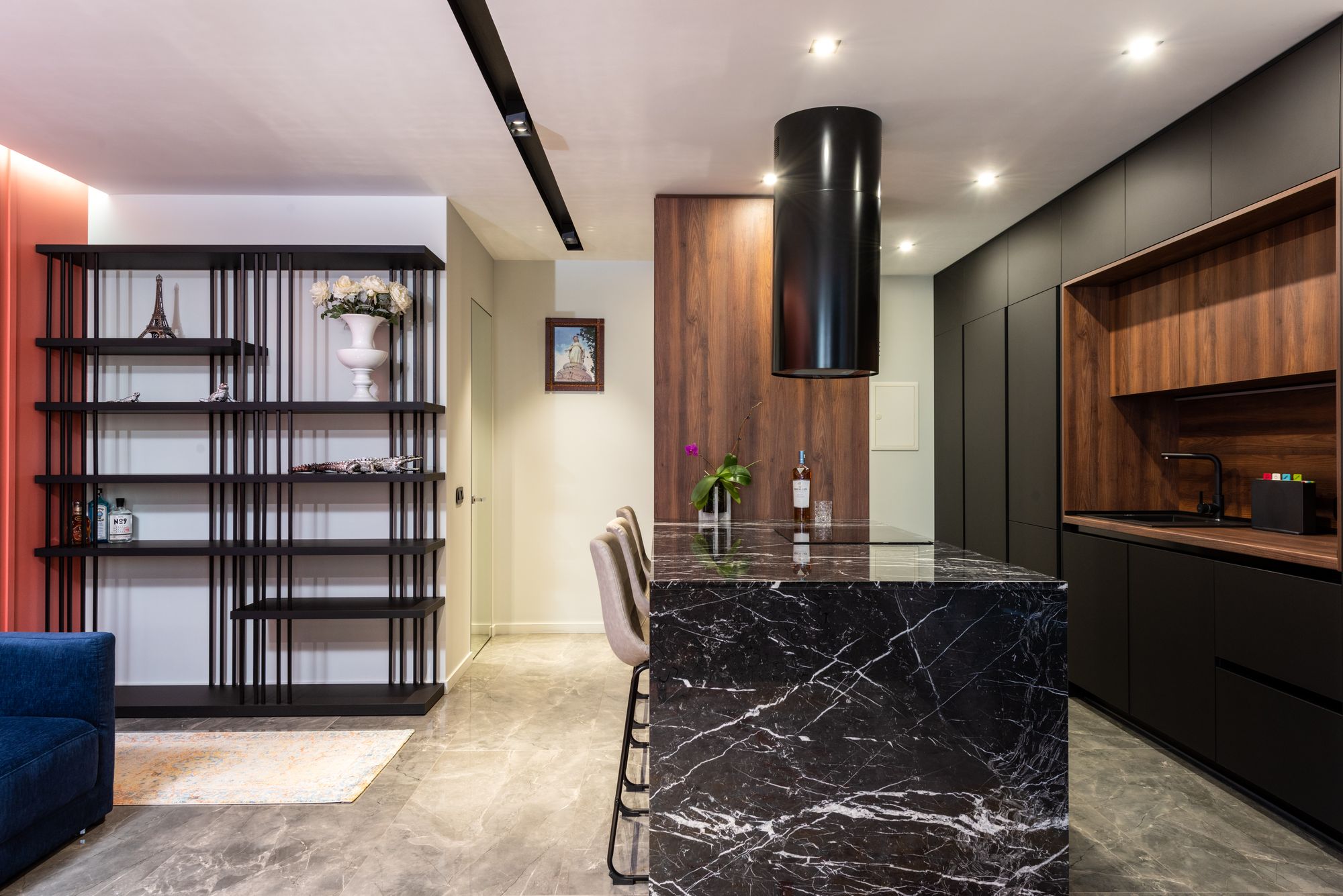
Warm timber frontsOak and ash veneer where high-gloss white once wentGrain reads as material rather than colour, so it ages slowly. Watch grain direction across tall runs.
Stone slab splashbacksBench material carried full height behind the cooktopAges with the benchtop it matches. The risk sits in joins and in vein matching, not in the idea.
Handleless frontsRouted finger-pull or a shadow rail in place of hardwareQuiet and durable when the rail is deep enough to grip cleanly with wet hands.
Deeper neutralsOlive, clay and charcoal on base cabinetrySafer below the bench than above it, where depth of colour narrows the room and the light.
Integrated appliancesFridge and dishwasher behind matching door panelsCalm elevation, but the cabinet opening is fixed to today’s appliance size at replacement time.

Still reads well in ten years

Cabinetry run to the ceilingA proportion decision, not a fashion one. It also removes the dust shelf.Drawers instead of base cupboardsPure mechanism. There is no style content in it to date.20 mm stone, mitred to 40 mmThickness reads as substance through every colour cycle.Matte, low-sheen door finishesAbsorb fingerprints and reflected light; high gloss announces its decade.

First to look dated

High-contrast two-tone schemesLocks two fashion colours together, so both have to stay right.Heavy profiled doors on a modern carcassReads as a decorative layer applied over the construction, not as construction.Small-format patterned splashbacksPattern dates faster than the large-format stone or tile behind it.Handles in whichever metal is currentDates quickly — and is the cheapest item to swap, which makes it the sensible place to take a risk.

Four tests before a trend goes into the schedule

01  Does it survive a plain photograph?Look at the finish on its own, with nothing styled beside it. Most short-lived choices depend on the styling around them.02  Can it be reversed cheaply?Handles, tapware and paint colour, yes. Door profile, stone and cabinet layout, no — those are bought once.03  Does it fix a dimension?Integrated appliances, slimline fronts and seating overhangs all commit a measurement that later replacements have to match.04  Is the material doing the work, or the colour?Timber, stone and honest metal age. A colour applied over a flat board has only its moment.
Where these decisions get documented

A style direction only becomes a decision once it is written as a line in the schedule: material, finish, thickness, hardware. Everything above is meant to be read that way.

Turn a style direction into a written schedule

Send through what your kitchen is now and which of these directions you keep returning to. We work across Bentleigh, Bentleigh East, Brighton East, Hampton East, Moorabbin, McKinnon and Ormond.