Luxury Kitchens & Premium Joinery
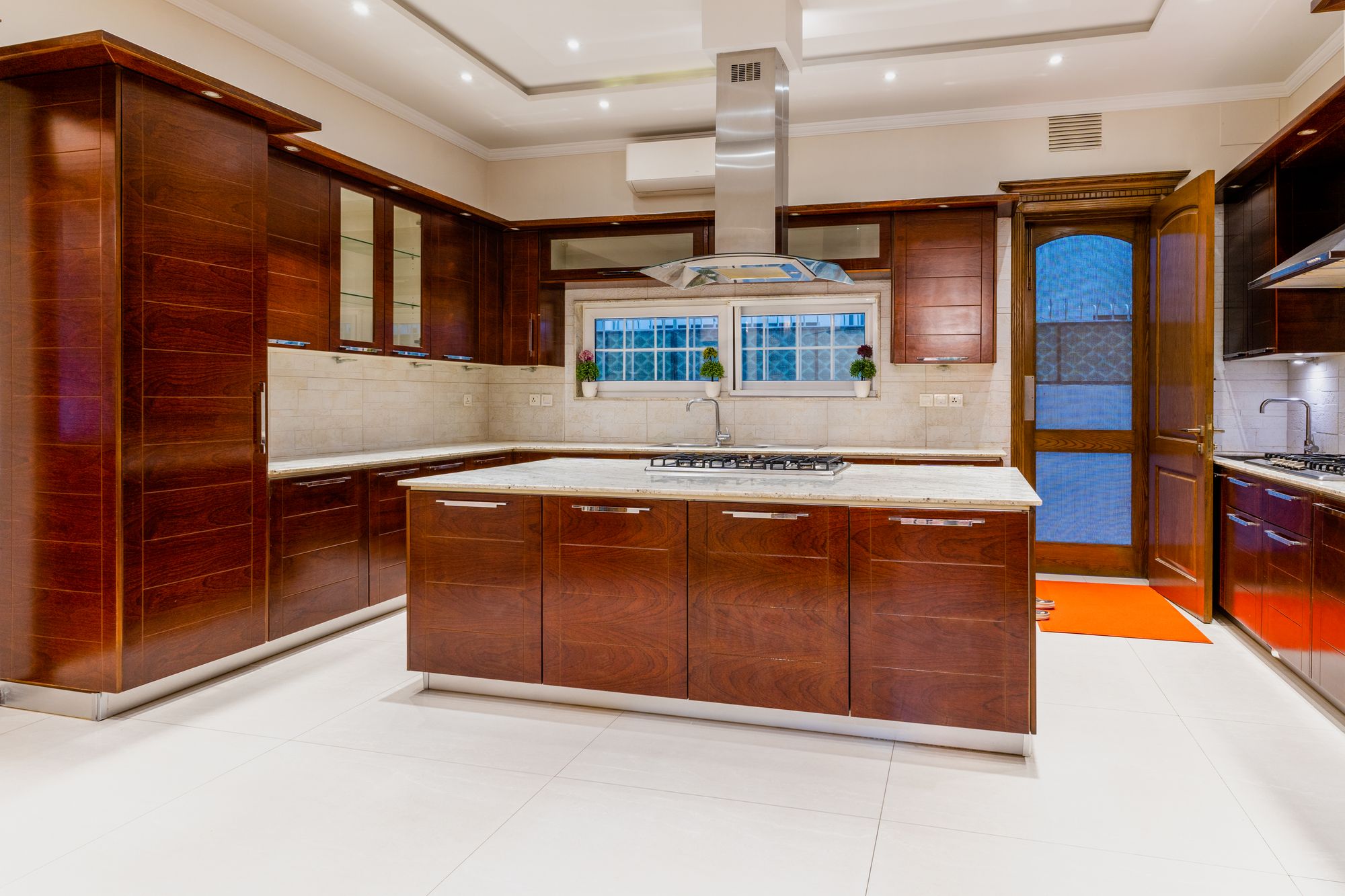
Natural stone and porcelain slabs, timber veneer with grain run across a whole run of doors, butler’s pantries, feature islands and mitred edge detail. The drawings are the same as any other kitchen; the tolerances, the slab handling and the hardware are not.
Where a premium kitchen budget actually goes
Very little of it goes into style. A luxury kitchen and a mid-range one can share a layout, an appliance list and a colour. What separates them is material grade and the labour needed to hold that material to a tight line: a whole slab bought so the vein carries from benchtop to splashback, veneer leaves kept in sequence, mitres closed so the joint reads as solid stone, hardware rated for decades rather than years.
Four lines that carry the specification
Each line is a decision with a consequence in cost, lead time and how the kitchen looks in ten years. Read them as a schedule, not a wish list.
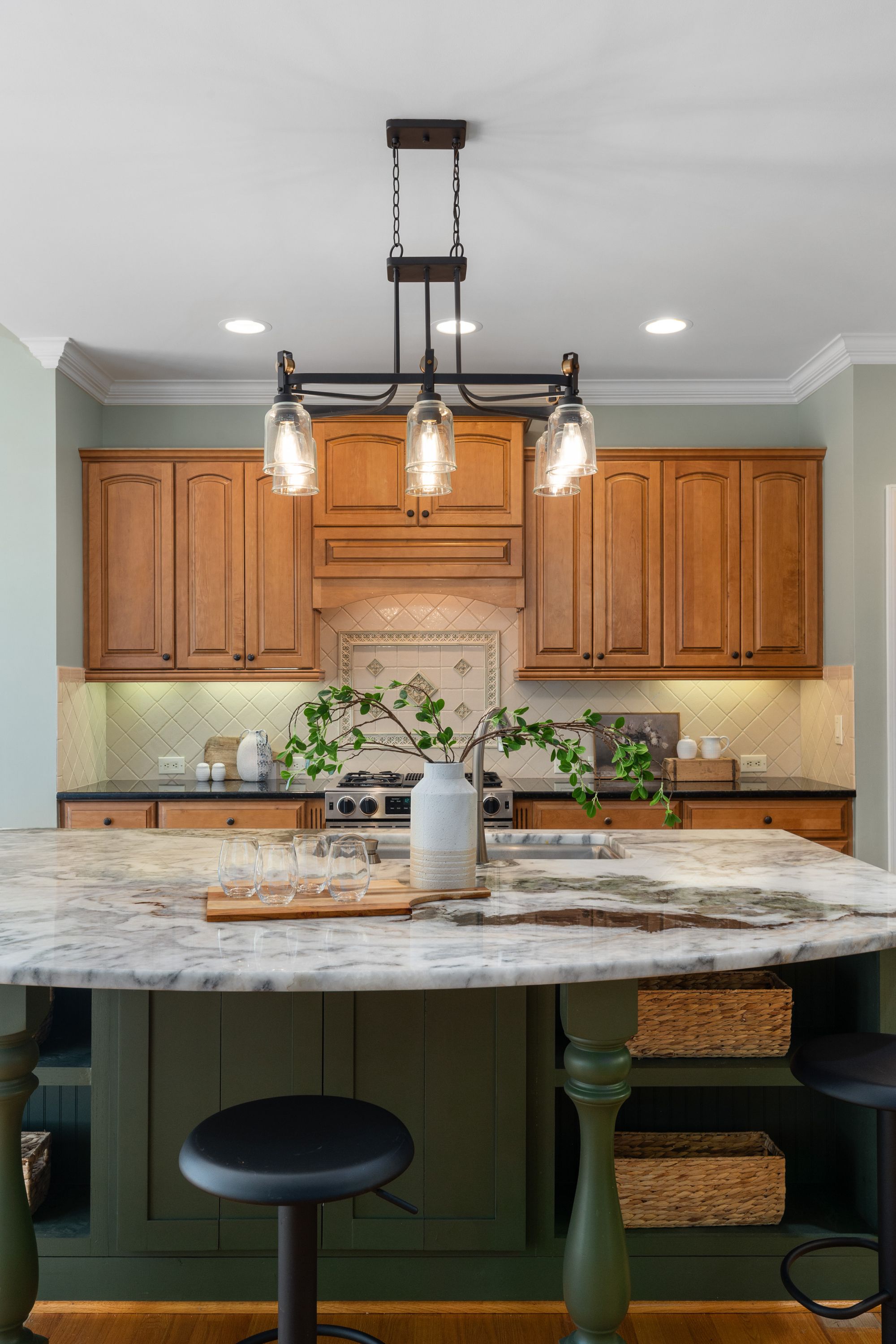
Natural stone is quarried, not printed: two slabs of the same name can read completely differently. At this level you view and reserve the actual slabs, and the fabricator cuts to keep the best movement on the island face. Porcelain gives a harder, stain-resistant surface with less variation and a thinner honest edge.
Hardware is the part you touch every day and the part that fails first. Heavy drawers under a stone bench need runners rated for the load with the drawer full, not empty. Solid brass or stainless pulls keep their finish; plated zinc does not.
The stages where high specification changes the build
Slab viewing and reservation, veneer batch ordering, hardware sign-off. Lead times are set here.07 Cabinetry
Carcasses set dead level, because a mitred stone edge will show any twist in the run beneath it.09 Benchtops & splashback
Digital template after install, then fabrication. Vein continuation onto a slab splashback is agreed at template.11 Finishing
Hinge and runner adjustment, shadow lines checked along the run, stone sealed where the material needs it.
Questions asked before a premium kitchen is specified
Is natural stone practical in a working kitchen?
Marble and other calcite stones etch with acid and mark with oil, and sealing slows that rather than stopping it. Owners who want the material accept a surface that ages. If you want the look without the patina, porcelain or a dense granite behaves better under daily use.
Why does a butler's pantry change the main kitchen?
How long do the premium materials add to the program?
Will this specification still look right in ten years?
Bring the slab, the veneer and the hardware into one schedule
Tell us the room, the finishes you are drawn to and the level of detail you want held, and we will come back with a written scope for your kitchen in Bentleigh, Brighton East, Hampton East or nearby.
Strip-out to handover, one scheduleKitchen Islands
Sizing, overhangs, services, storageKitchen Splashbacks
Slab, tile, glass, full heightModern Kitchens
Handleless fronts, matte and satinChoosing a Kitchen Benchtop
Guide: durability, heat, maintenance